



Our own home is the place where we should feel safest and most comfortable.
However, with increasing age or due to physical limitations, familiar tasks can suddenly turn into challenges.
When it comes to accessibility, many people immediately think of expensive conversion measures, knocking down walls or installing lifts. But that doesn’t always have to be the case! It is often the small, clever everyday helpers that make the decisive difference in maintaining independence in your own four walls.
Safety in the bathroom –
non-slip and stable
The bathroom is one of the most important rooms for daily routines, but also carries the highest risk of falling.
Minimal adjustments often help here:
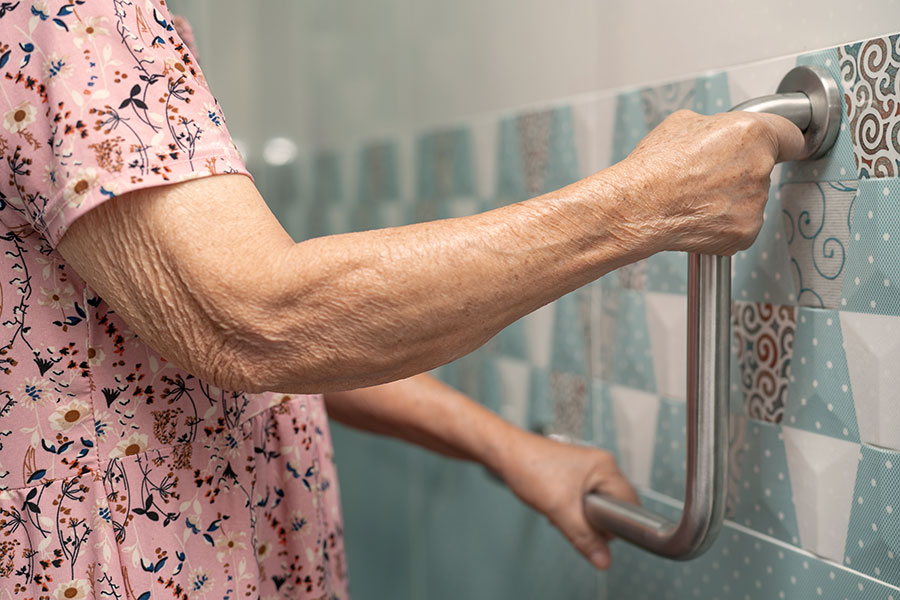
- Grab rails without drilling: Modern suction grab rails can be flexibly attached to tiles and provide a firm hold when getting in and out of the shower.
- Shower stool: It allows you to groom yourself while sitting down, conserves your strength and minimizes the risk of dizziness.
- Raised toilet seat: A classic that makes getting up and sitting down much easier and is easy on the joints.
The kitchen – sovereignty when cooking and eating
In the kitchen, it’s all about precision and strength. When the strength in your hands diminishes, ergonomic tools can help:
- Universal opener: Whether jam jar or screw cap – special lever tools massively reduce the amount of force required.
- Ergonomic cutlery: thicker, non-slip handles sit securely in the hand and allow you to enjoy your meal without cramping.
- Reaching aids: An “extended arm” helps to safely reach objects from high shelves or the floor without having to bend or stretch.
Fall prevention in the home
Tripping hazards lurk everywhere and are often overlooked in everyday life. Small changes ensure maximum safety:
Health insurance subsidy
Did you know that many of these aids can be subsidized by your health insurance if you have a prescription?
In addition, the care insurance fund often grants subsidies for “measures to improve the living environment” if the care degree is recognized.
Barrier-free living:
Small aids, big impact ( Cloned )
Our own home is the place where we should ...
Barrier-free living:
Small aids, big impact
Our own home is the place where we should ...

*NOTE
The treatment method described here is a therapy method of natural empirical medicine, which is not a generally recognized method in the sense of recognition by conventional medicine. All statements made about the properties, effects and indications of the therapy methods presented are based on the findings and experience of the therapy facility itself, which are not shared by the prevailing orthodox medicine and for which there are no scientifically reproducible causal relationships.